PRODUCTS
Laboratory viscometers
+ infoDynamic viscosity measurement for laboratory and industrial applications
Dynamic viscosity measurement is essential for evaluating how liquids and semi-solid materials resist flow under applied force. Accurate viscosity data supports product development, quality control and process optimisation across a wide range of industries.
Fungilab provides complete dynamic viscosity measurement solutions based on precision rotational viscometers, temperature control systems and specialized accessories designed to deliver reliable, repeatable and traceable laboratory results.
Whether measuring low-viscosity liquids or highly viscous materials, Fungilab offers instruments adapted to routine laboratory testing as well as demanding research applications.
Our products
Viscolead Series
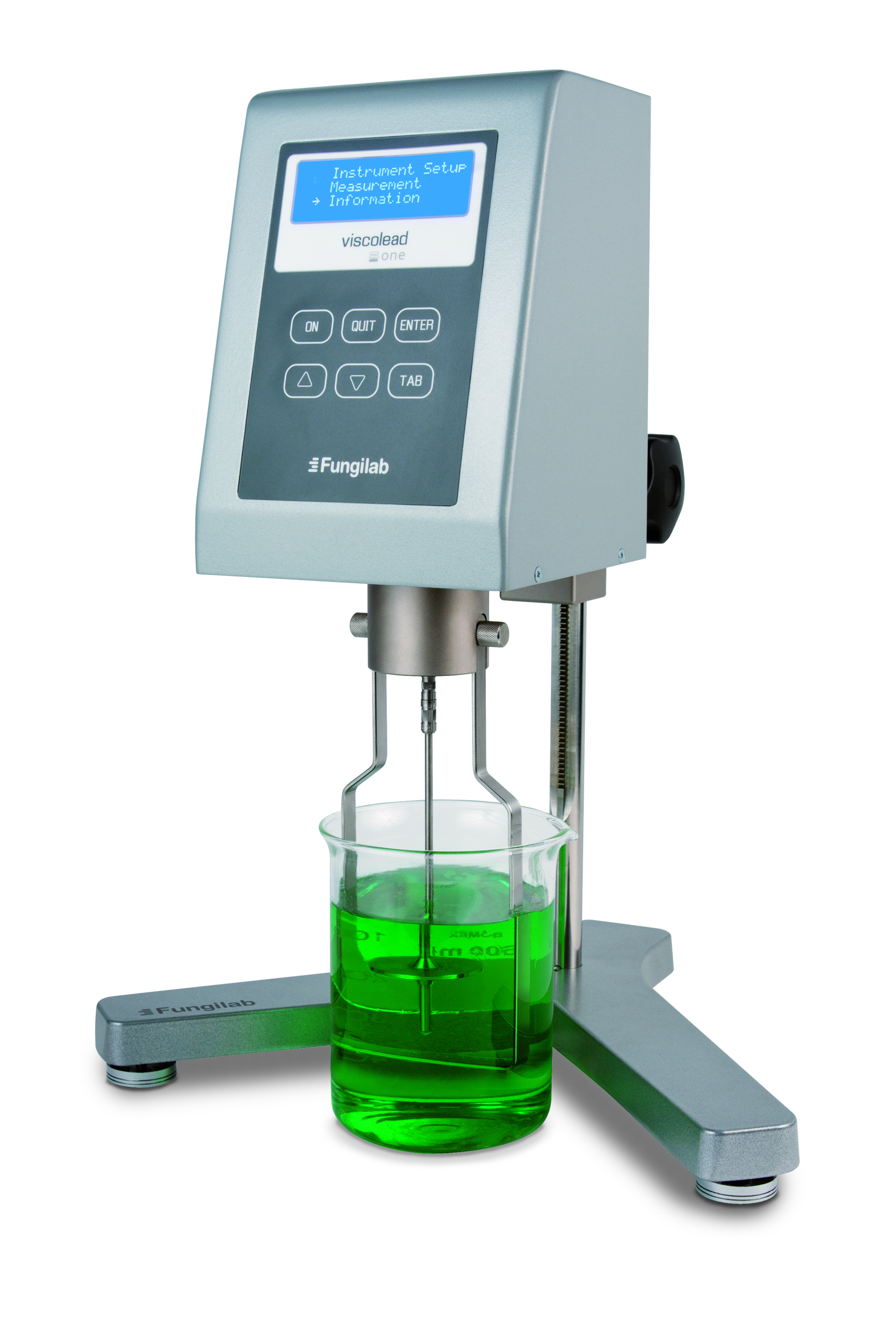
Viscolead ONE
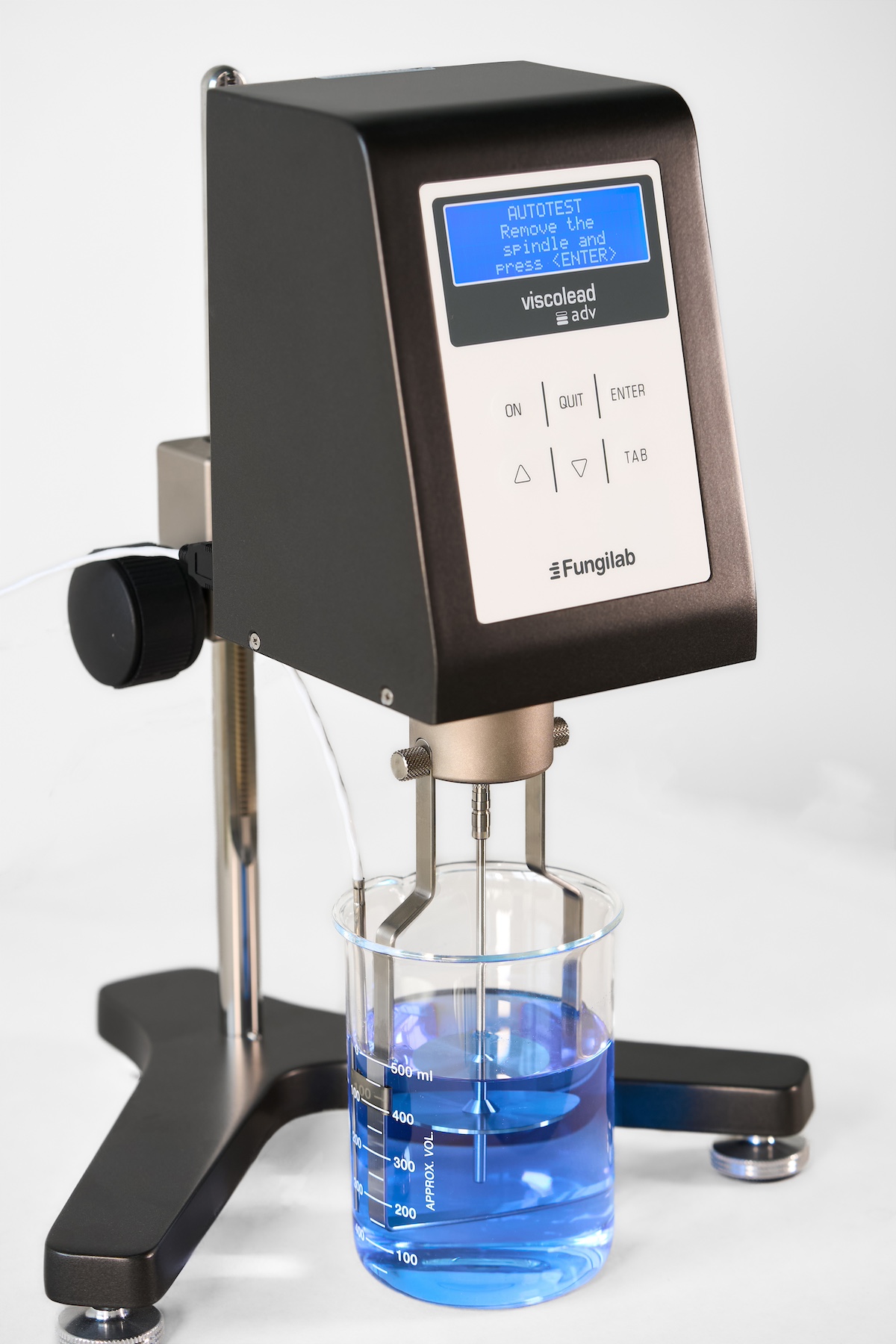
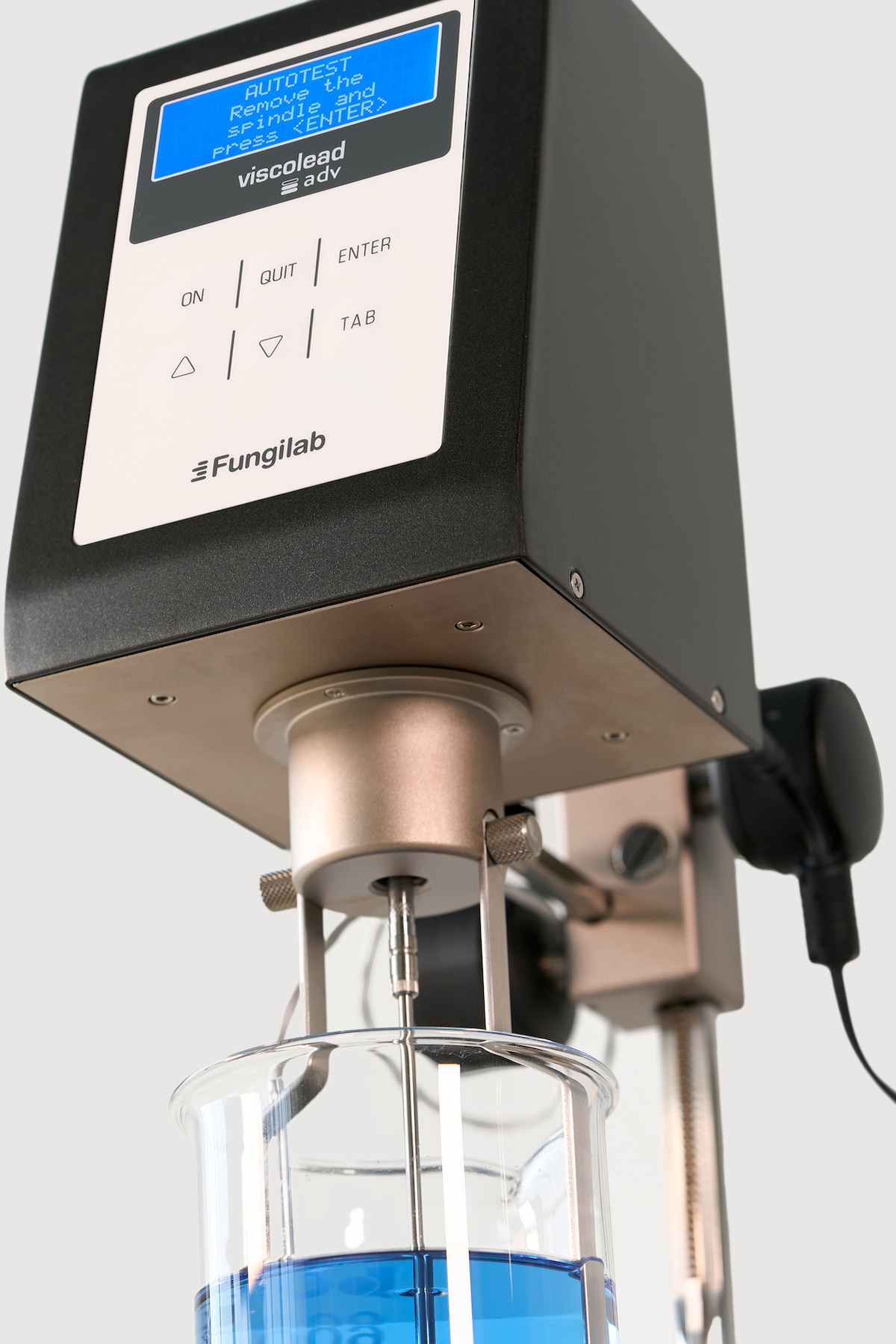
Viscolead ADV
Accessories
LABORATORY DIVISION
Dynamic viscosity
Viscosity is part of the science of Rheology which quantifies the resistance materials give to changing shape.
Proper interpretation of viscosity data can reduce the rate of rejects while keeping production and formulation development costs to a minimum. Consistent product quality is ensured through proper viscosity measurements, either alone or in conjunction with compatible tests.
Dynamic viscosity testing can help with:
- Material characterization or “finger-printing”
- Standard testing methods to check for differences between batches
- Indirect way of measuring quality
- Product formulation
- Quality control
- Process control
- Design, optimization and operation of process equipment
Material characterization or “finger-printing”
Standard testing methods to check for differences between batches
Indirect way of measuring quality
Product formulation
Quality control
Process control
Design, optimization and operation of process equipment
Viscosity types
Dynamic viscosity
Centipoise (mPa*s)
Kinematic viscosity
Centistokes (mm2/sec)
Apparent viscosity
Centipoise (mPa*s)
Newton’s Law
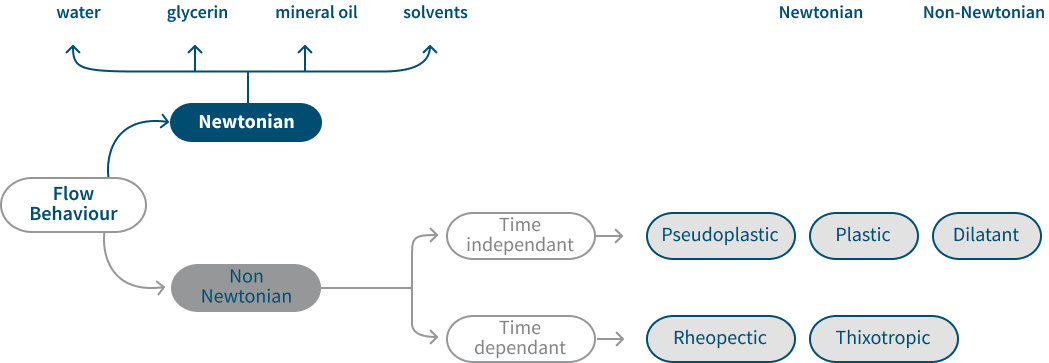
According to Newton’s law, the viscosity of a fluid is constant. As shear rate changes, shear stress changes in proportion such that viscosity is constant. Common fluids that exhibit such behavior are:
Unfortunately for us, not all fluids follow Newton’s law. In fact, most fluids do not. For this reason, fluids are classified into two categories:
Rotational Viscometer
The viscosity is calculated from the measured torque and rotational speed, as well as the dimensions of the measuring geometry.
A fluid’s resistance to flow is measured by the torque it exerts on the rotating shaft of the viscometer.
Absolute viscosity: the measuring geometry fulfills certain requirements (which is the case of coaxial spindles).
Relative viscosity: the dimensions of the measuring geometry are not well defined.
Advantage
Flexibility in:
- Viscosity Range
- Temperature range
- Shear rate range
Application
For Newtonian and non-Newtonian substances and temperatures different from room temperature.
Professional viscometers for dynamic and kinematic viscosity testing
Viscometers are essential laboratory instruments used to determine the resistance of a fluid to flow. Depending on the measuring principle, different viscometer technologies are available to analyse Newtonian and non-Newtonian fluids across a wide range of viscosities.
Types of laboratory viscometers
Fungilab manufactures and supplies several viscosity measurement technologies for different laboratory applications.
- Rotational (dynamic) viscometers for Newtonian and non-Newtonian fluids.
- Viscolead Series professional rotational viscometers.
- V-Series advanced rotational viscometers.
- Capillary viscometers for kinematic viscosity determination.
- Falling-ball viscometers for transparent Newtonian liquids.
Industries using viscometers
- Pharmaceutical laboratories.
- Food and beverage manufacturers.
- Cosmetics and personal care industries.
- Chemical production.
- Paints, coatings and inks.
- Petroleum and lubricant analysis.
- Universities and research institutes.
- Industrial quality control laboratories.
Specialised measurement accessories
Rotational viscometers can be adapted for specific applications using dedicated accessories.
- Small Sample Adapter (APM) for limited sample volumes.
- Low Viscosity Adapter (LCP) for low-viscosity fluids.
- HELDAL Unit for highly viscous and non-flowing materials.
- Thermosphere for elevated-temperature viscosity measurements.
Temperature control for reliable measurements
Because viscosity is directly affected by temperature, Fungilab provides heating circulators and refrigerated circulators to maintain stable testing conditions and improve measurement repeatability.
Calibration and quality assurance
Accurate viscosity measurements require regular verification using certified viscosity standard oils. These reference materials ensure traceability, instrument verification and compliance with laboratory quality procedures.
Advantages of Fungilab viscometers
- Accurate and repeatable viscosity measurements.
- Solutions for both dynamic and kinematic viscosity.
- Wide range of specialised accessories.
- Comprehensive temperature control options.
- Suitable for research and industrial laboratories.
- Reliable long-term laboratory performance.
Frequently asked questions about the Viscolead ADV
What is a laboratory viscometer?
A laboratory viscometer is an instrument used to measure the viscosity of liquids and semi-solid materials for quality control, research and industrial applications.
What types of viscometers are available?
The main types include rotational viscometers, capillary viscometers and falling-ball viscometers, each designed for specific measurement applications.
Which industries commonly use viscometers?
Viscometers are widely used in pharmaceutical, cosmetic, food, chemical, petroleum, coating and research laboratories.
Why is temperature important during viscosity measurements?
Viscosity varies with temperature, so precise thermal control is essential for obtaining accurate, repeatable and reliable measurement results.
Can viscometers measure non-Newtonian fluids?
Yes. Rotational viscometers are specifically designed to measure both Newtonian and non-Newtonian materials across a broad viscosity range.
How is measurement accuracy maintained?
Routine verification using certified viscosity standard oils ensures traceable and accurate viscosity measurements over time.
Can laboratory viscometers be adapted for specialised applications?
Yes. Accessories such as the APM, LCP, HELDAL Unit and Thermosphere system allow laboratories to measure a wide variety of sample types and viscosities.
Why choose Fungilab viscometers?
Fungilab offers complete laboratory viscosity solutions, combining high-quality instruments, specialised accessories, certified standards and precise temperature control systems for professional viscosity testing.