PRODUCTS
Höppler viscometer
+ infoDynamic viscosity measurement for laboratory and industrial applications
Dynamic viscosity measurement is essential for evaluating how liquids and semi-solid materials resist flow under applied force. Accurate viscosity data supports product development, quality control and process optimisation across a wide range of industries.
Fungilab provides complete dynamic viscosity measurement solutions based on precision rotational viscometers, temperature control systems and specialized accessories designed to deliver reliable, repeatable and traceable laboratory results.
Whether measuring low-viscosity liquids or highly viscous materials, Fungilab offers instruments adapted to routine laboratory testing as well as demanding research applications.
Our products
Viscolead Series
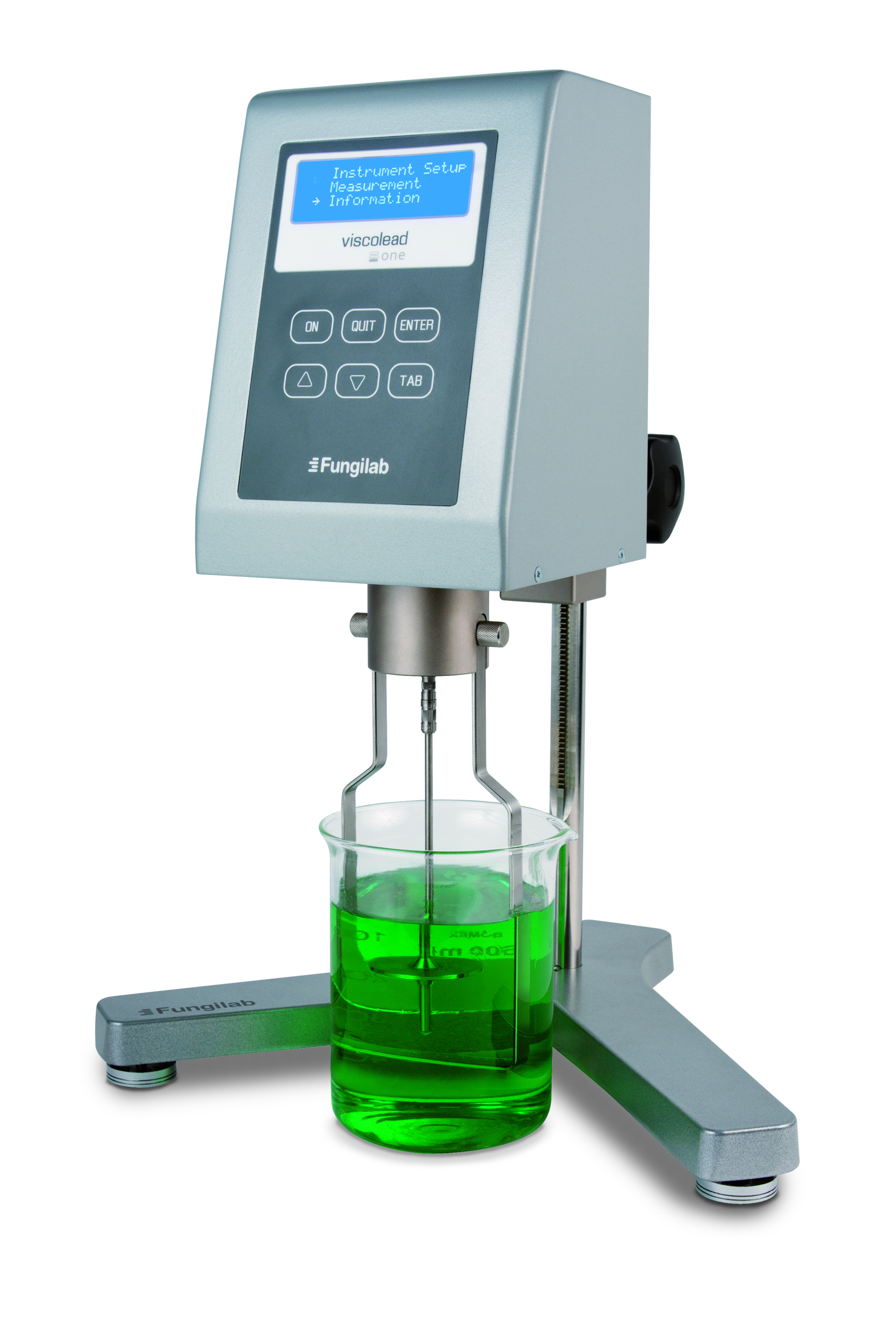
Viscolead ONE
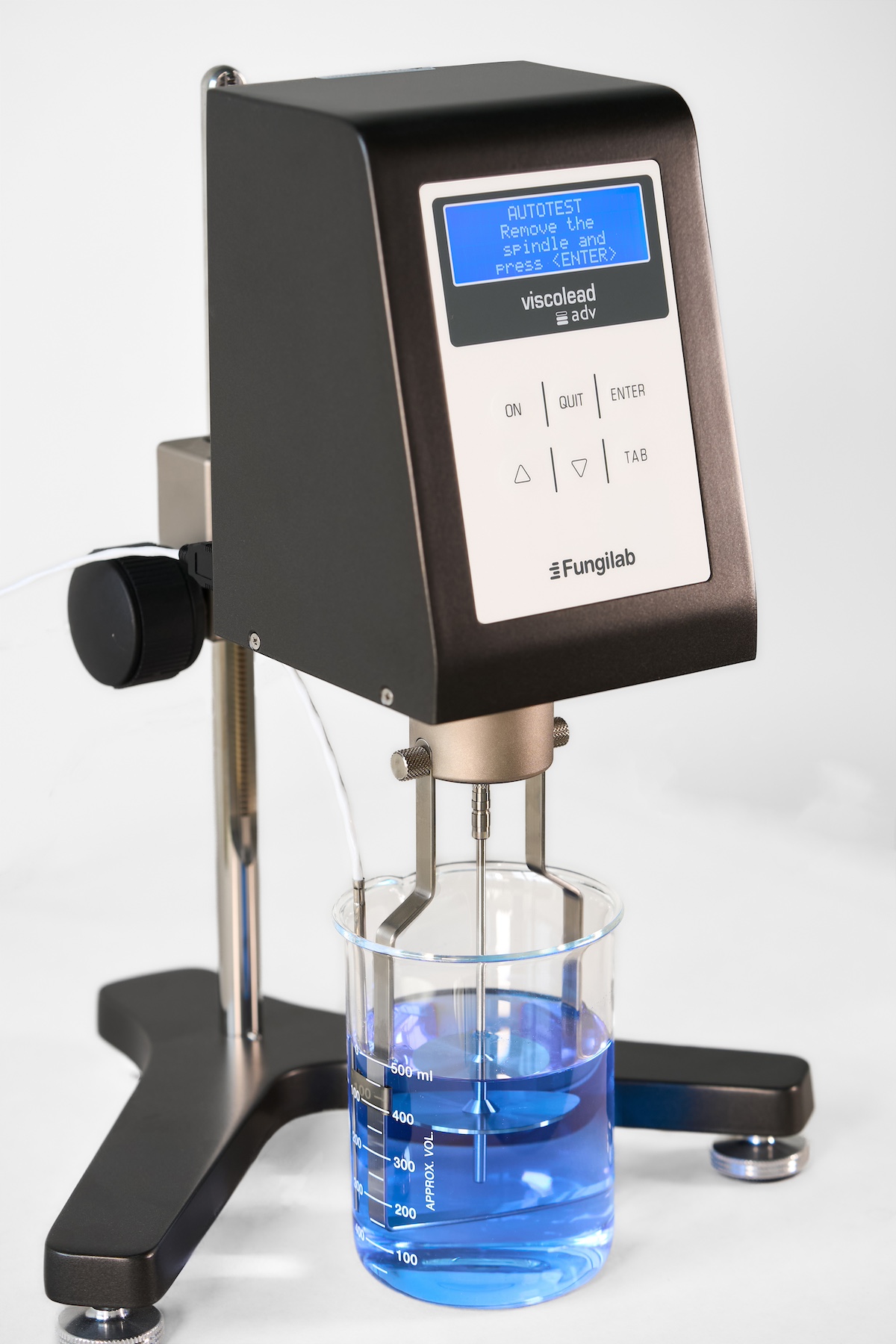
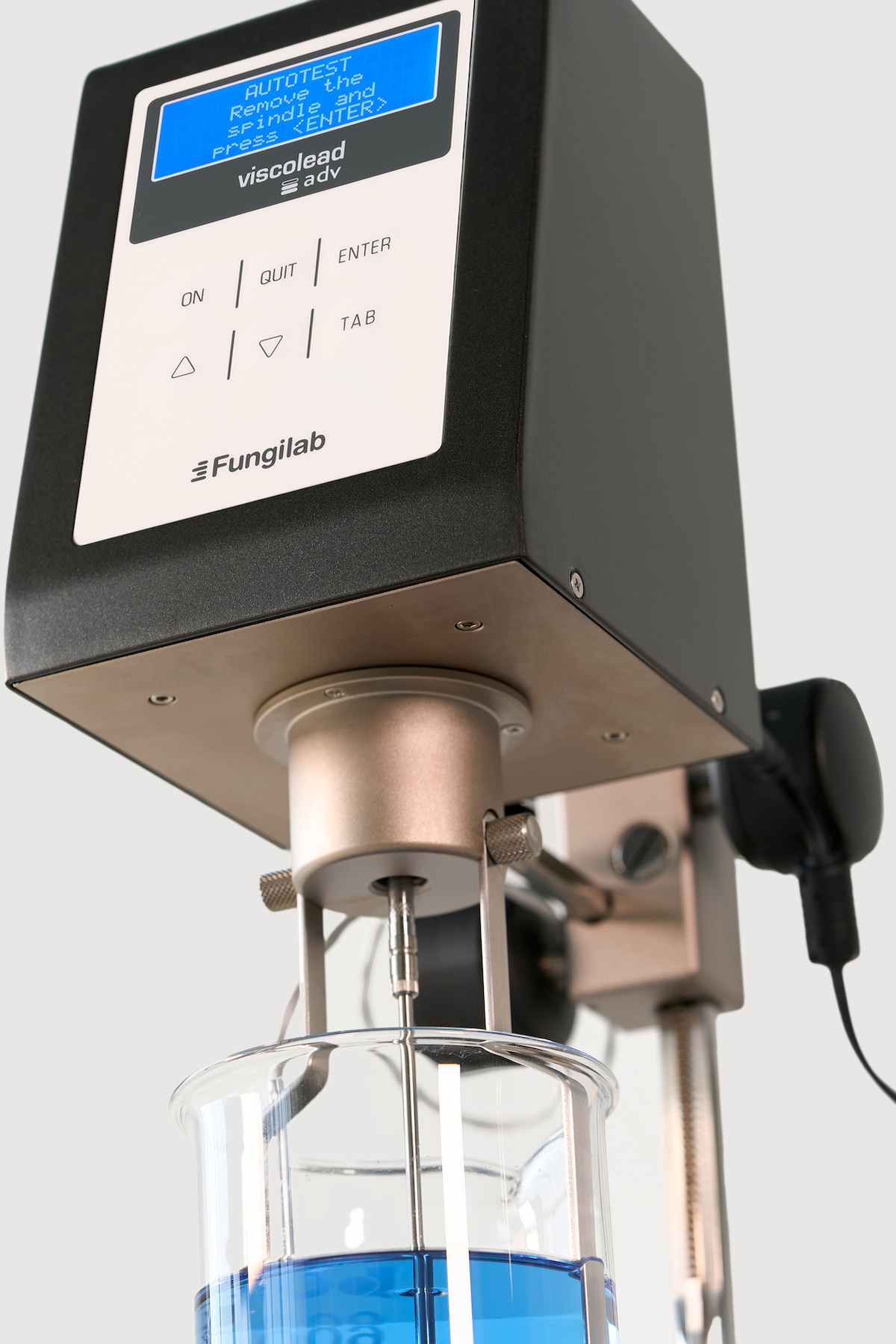
Viscolead ADV
Accessories
LABORATORY DIVISION
Dynamic viscosity
Viscosity is part of the science of Rheology which quantifies the resistance materials give to changing shape.
Proper interpretation of viscosity data can reduce the rate of rejects while keeping production and formulation development costs to a minimum. Consistent product quality is ensured through proper viscosity measurements, either alone or in conjunction with compatible tests.
Dynamic viscosity testing can help with:
- Material characterization or “finger-printing”
- Standard testing methods to check for differences between batches
- Indirect way of measuring quality
- Product formulation
- Quality control
- Process control
- Design, optimization and operation of process equipment
Material characterization or “finger-printing”
Standard testing methods to check for differences between batches
Indirect way of measuring quality
Product formulation
Quality control
Process control
Design, optimization and operation of process equipment
Viscosity types
Dynamic viscosity
Centipoise (mPa*s)
Kinematic viscosity
Centistokes (mm2/sec)
Apparent viscosity
Centipoise (mPa*s)
Newton’s Law
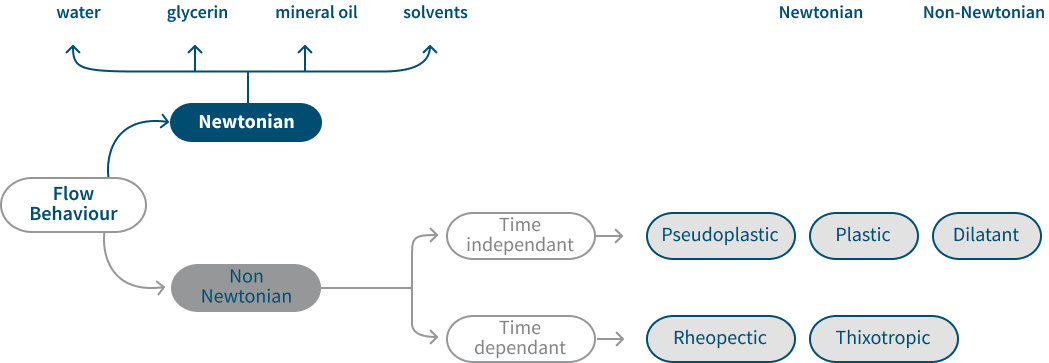
According to Newton’s law, the viscosity of a fluid is constant. As shear rate changes, shear stress changes in proportion such that viscosity is constant. Common fluids that exhibit such behavior are:
Unfortunately for us, not all fluids follow Newton’s law. In fact, most fluids do not. For this reason, fluids are classified into two categories:
Rotational Viscometer
The viscosity is calculated from the measured torque and rotational speed, as well as the dimensions of the measuring geometry.
A fluid’s resistance to flow is measured by the torque it exerts on the rotating shaft of the viscometer.
Absolute viscosity: the measuring geometry fulfills certain requirements (which is the case of coaxial spindles).
Relative viscosity: the dimensions of the measuring geometry are not well defined.
Advantage
Flexibility in:
- Viscosity Range
- Temperature range
- Shear rate range
Application
For Newtonian and non-Newtonian substances and temperatures different from room temperature.
Falling ball viscosity measurement for laboratory applications
The Höppler viscometer determines dynamic viscosity by measuring the time taken for a calibrated ball to move through a liquid-filled tube positioned at a defined angle. The falling time is directly related to the liquid's viscosity and is calculated using the instrument calibration constants.
This method is particularly suitable for transparent Newtonian liquids where highly accurate and reproducible viscosity measurements are required.
How a Höppler viscometer works
The instrument consists of a glass tube containing the test liquid and a precision ball with known dimensions and density. Under controlled temperature conditions, the ball falls through the sample and the transit time between two reference marks is measured. The viscosity is then calculated according to the instrument's calibration data.
Typical applications
- Pharmaceutical solutions.
- Chemical products.
- Industrial oils.
- Petroleum products.
- Solvents.
- Laboratory reference liquids.
- Research and development.
Importance of temperature control
Since viscosity is strongly influenced by temperature, Höppler measurements should always be performed under carefully controlled thermal conditions. Fungilab offers heating circulators and refrigerated circulators to maintain stable measurement temperatures.
Alternative viscosity measurement methods
Although Höppler viscometers are ideal for transparent Newtonian liquids, many industrial products exhibit non-Newtonian behaviour or require broader measuring capabilities. For these applications, Fungilab manufactures professional rotational viscometers, including the Viscolead Series and V-Series.
Instrument verification
To ensure long-term measurement reliability, laboratory instruments should be routinely verified using certified viscosity standard oils, helping maintain traceable and repeatable viscosity measurements.
Choosing the appropriate viscometer
The selection of a viscosity measurement method depends on the sample characteristics, viscosity range, transparency and testing requirements. Höppler viscometers are particularly suitable for transparent Newtonian liquids, while rotational viscometers provide greater flexibility for complex fluids and industrial formulations.
Frequently asked questions about the Viscolead ADV
What is a Höppler viscometer?
A Höppler viscometer is a falling ball viscometer used to determine the dynamic viscosity of transparent Newtonian liquids by measuring the transit time of a precision ball through the sample.
Which liquids can be measured with a Höppler viscometer?
It is primarily intended for transparent Newtonian liquids such as oils, solvents, pharmaceutical solutions and laboratory reference fluids.
Why is temperature control important?
Viscosity varies with temperature, making precise thermal control essential for obtaining accurate and repeatable viscosity measurements.
How does a Höppler viscometer measure viscosity?
The instrument measures the time required for a calibrated ball to travel through the liquid under gravity, with the viscosity calculated from the measured transit time.
Can a Höppler viscometer measure non-Newtonian fluids?
It is mainly designed for Newtonian liquids. For non-Newtonian materials, rotational viscometers are generally the preferred solution.
Which industries use Höppler viscometers?
They are widely used in pharmaceutical, chemical, petroleum and research laboratories requiring highly accurate viscosity measurements.
How can measurement accuracy be verified?
Routine verification using certified viscosity standard oils helps maintain accurate, repeatable and traceable laboratory measurements.
When should a rotational viscometer be chosen instead?
Rotational viscometers are recommended for non-Newtonian fluids, wider viscosity ranges and applications requiring advanced viscosity analysis.